
- Elevating Events for Omnichannel Engagement
From Content to Credibility: Treating LLMs as the New Customer
The new rules of medical visibility and how to win authority in AI outputs.
Now available on-demand

Jose Maria (Chema) Guido Avila
Global Dupixent Patient Experience Lead Respiratory
Sanofi
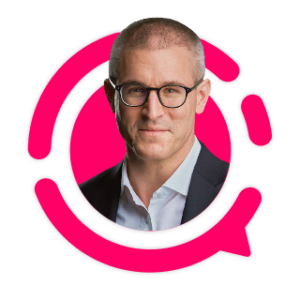
Pierre Metrailler
CEO
Onomi
About the webinar
HCPs are no longer typing symptoms into Google. They’re asking AI. And the rules for how pharma earns visibility, credibility, and influence in those answers are fundamentally different from anything the industry has done before.
In this on-demand episode, Jose Maria “Chema” Avila and Pierre Metrailler break down what it actually takes to show up in an AI-generated answer, and why most pharma teams are not ready for the shift.
The core argument Chema made is one that doesn’t get made enough: LLMs should be treated like a customer segment. They read content, weigh authority, and assemble an answer the same way a person forms an opinion. That framing has real consequences for how pharma teams think about content strategy, because the question is no longer how you rank in search. It’s how you show up in an AI-generated answer.
A poll early in the session showed that 61.9% of attendees expected clinical guidelines and journal articles to carry the most authority with LLMs. Chema pushed back. Depending on how the question is framed, guidelines don’t always show up at all. Practical, conversational content, including YouTube videos of doctors explaining things in plain language, and Reddit threads where patients describe their own experiences, can rank just as prominently. The ecosystem is wider than most pharma teams assume.
Pierre connected that to events. Your symposia, webinars, and advisory boards are already generating exactly the kind of expert, peer-driven, attributed scientific dialogue that LLMs treat as authoritative. Almost none of it is structured to leave the room in a form a model can read. That’s the gap.
The 3 building blocks Chema laid out
Chema’s practical framework for pharma teams starts with measurement, which most teams leave to the end. Before changing anything, you need to know how you currently rank across the questions HCPs are actually asking, not the brand messages you want to push. From there, the second step is making your owned content readable: website structure, schema, and whether your content is technically accessible to LLMs. The third is influencing the sources you don’t own, third-party sites, KOL channels, medical education platforms, making sure your story is consistent across the ecosystem LLMs are already pulling from.
Pierre shared a 7-step pipeline Onomi built for a customer with roughly 100 HCP webinars. The pipeline ingests recordings, runs automatic speech recognition with a custom medical dictionary (50 to 200 terms per webinar), filters for pharmacovigilance issues and off-label content, and then reformats the material as Q&A. Named speakers get linked to their ORCID and PubMed profiles directly in the page markup, so when an LLM reads the content, it sees a named authority, not just a brand.
Chema also introduced the EEAT framework (Experience, Expertise, Authoritativeness, Trustworthiness), originally an SEO construct that maps cleanly onto what LLMs reward. First-hand content, attributed expertise, scientific backing, and a credible host platform. A KOL interview published on a reputable third-party medical education site will consistently outrank the same content on brand.com.
The key questions we covered
On compliance and gated content
One of the most practical questions was about content behind a login.
Chema’s answer: there is a technical path that allows LLMs to read protected content without exposing it to users directly. Your legal and regulatory teams would need to sign off, but the option exists and is worth exploring with them.
In cases where compliance requires us to block crawlers from accessing branded or medical content, what practical approaches can we use to still signal expertise and authority to LLMs, without compromising regulatory requirements?
Chema’s first instinct was to question the premise. “I would like to understand first how many questions are actually branded. You may be surprised that you would wanna say, ‘I wanna talk about my brand,’ and the doctors are not even asking the question.” Worth doing that audit before assuming branded content needs a GEO strategy at all.
But for content that does need protecting, there is a technical path. You can allow LLMs to read your content while keeping it behind a login for users. As Chema put it: “You effectively block the user from actually having access to specific content. But you allow the LLM to read it and provide it in a summary without exposing all the content and actually following compliantly the rules.” Your legal, regulatory, and medical teams would need to weigh in, but the option is real.
The takeaway
Most pharma teams are still optimizing for a search bar that HCPs have already moved on from. The content that earns authority in AI-generated answers is expert-attributed, peer-driven, and consistent across channels you do not always own. Your events are already generating it. The gap is not content volume. It is whether that content ever leaves the room in a form an LLM can read.
Watch the full session on demand
Speakers
Jose Ma. (Chema) Guido Avila
Global Dupixent Patient Experience Lead Respiratory
Sanofi
Pierre Metrailler
CEO
Onomi
About Onomi
Onomi is a platform that helps pharma instrument scientific exchanges at congresses, webinars and advisory boards – connecting KOL engagement, booth insights, and symposium data into a single evidence layer integrated with your CRM. With over 22 years of experience & trusted by 15 of the top 20 life science companies, Onomi creates engaging HCP experiences, measures real impact & is more cost-effective than traditional point solutions.
For more information, reach out today.